
Indeed Is Just Being Indeed. That Does Not Mean You Have to Stay.
Three policy moves in six months tell you everything you need to know about where Indeed is going, and why buyers no longer have to follow.

Indeed built the largest job board in the world on a simple model: aggregate everything, then charge employers to stand out in the pile. It worked brilliantly for years. Employers got reach. Candidates got access. Indeed got paid per click.
The problem is that the job market has changed, and the model hasn’t. Hiring slowed. Application volume stayed high. Quality dropped. Recruiters spent more time screening out unqualified applicants than finding the right ones. The cost per hire increased even as the cost per click remained the same. Employers were not getting fewer clicks. They were getting worse ones.
Candidates felt it too. As sponsored placements pushed the most relevant jobs down the page, job seekers found themselves navigating a feed optimized for advertiser visibility rather than fit. The black hole application experience: apply, hear nothing, never know why, became the norm on platforms built to maximize employer spend rather than candidate value.
The market has been signaling this shift for several years now. Employers aren’t asking for more reach. They are asking for better matches. They are willing to invest in quality, in outcome-accountable platforms that deliver fewer, more qualified candidates rather than more applications that go nowhere. That willingness to pay for quality over volume is the most important commercial signal in the talent acquisition market right now.
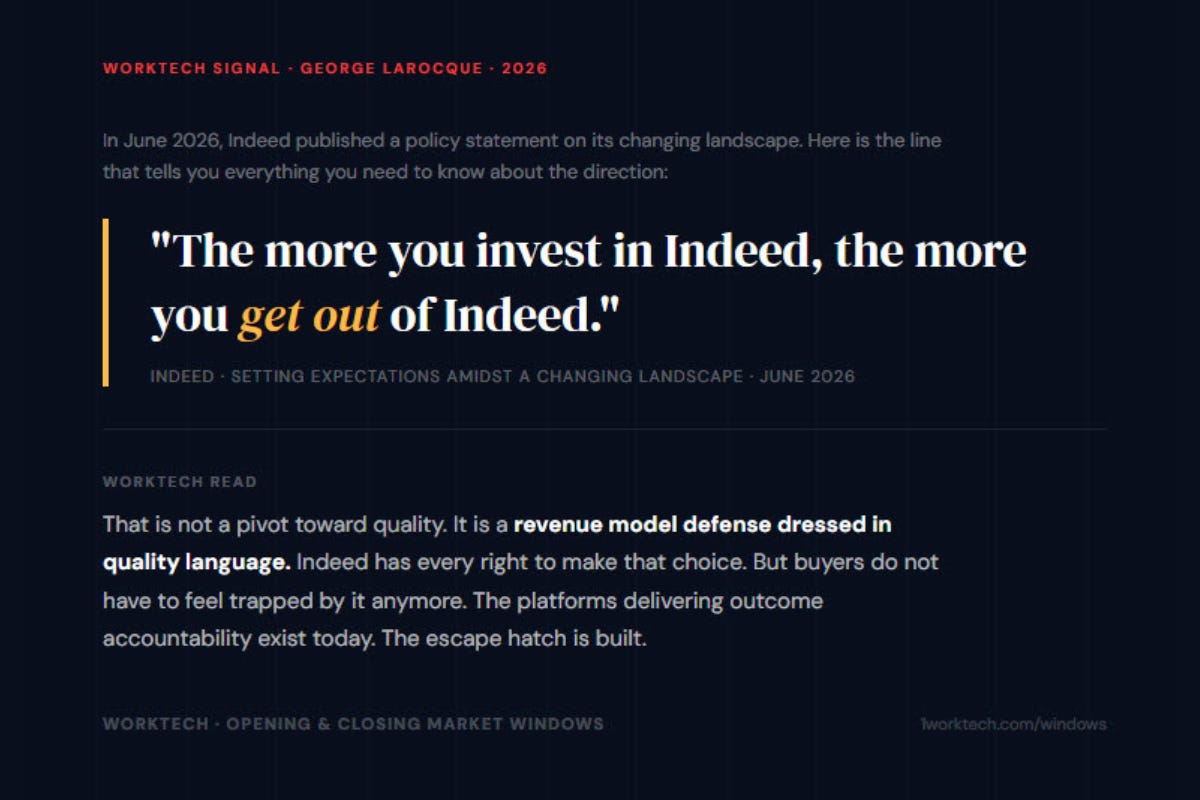
Indeed’s response to that signal has been to double down on the volume model. In December 2025, they capped free job postings at three per employer per month. In March 2026, they eliminated organic visibility for jobs sent via XML feeds that did not use Indeed Apply. In June 2026, they published a policy statement that made the commercial logic explicit: “The more you invest in Indeed, the more you get out of Indeed.”
That is not a pivot toward quality. It is a revenue-model defense dressed in high-quality language. And Indeed has every right to make that choice.
But buyers don’t have to feel trapped by it anymore. The platforms delivering outcome accountability, fewer candidates, better fit, measurable hire results, exist today. Partners who navigate job boards on behalf of employers, combining media expertise with technology and accountability, exist today. The escape hatch is built. The question is whether buyers know where it is and have the confidence to walk through it.
That’s the subject of the WorkTech Opening and Closing Market Windows report on Job Boards and Programmatic Advertising. The most comprehensive analysis of where this category stands, where the capital has gone, and what is replacing the model Indeed is doubling down on.
Read the full report: https://1worktech.com/jobboardmodeldying